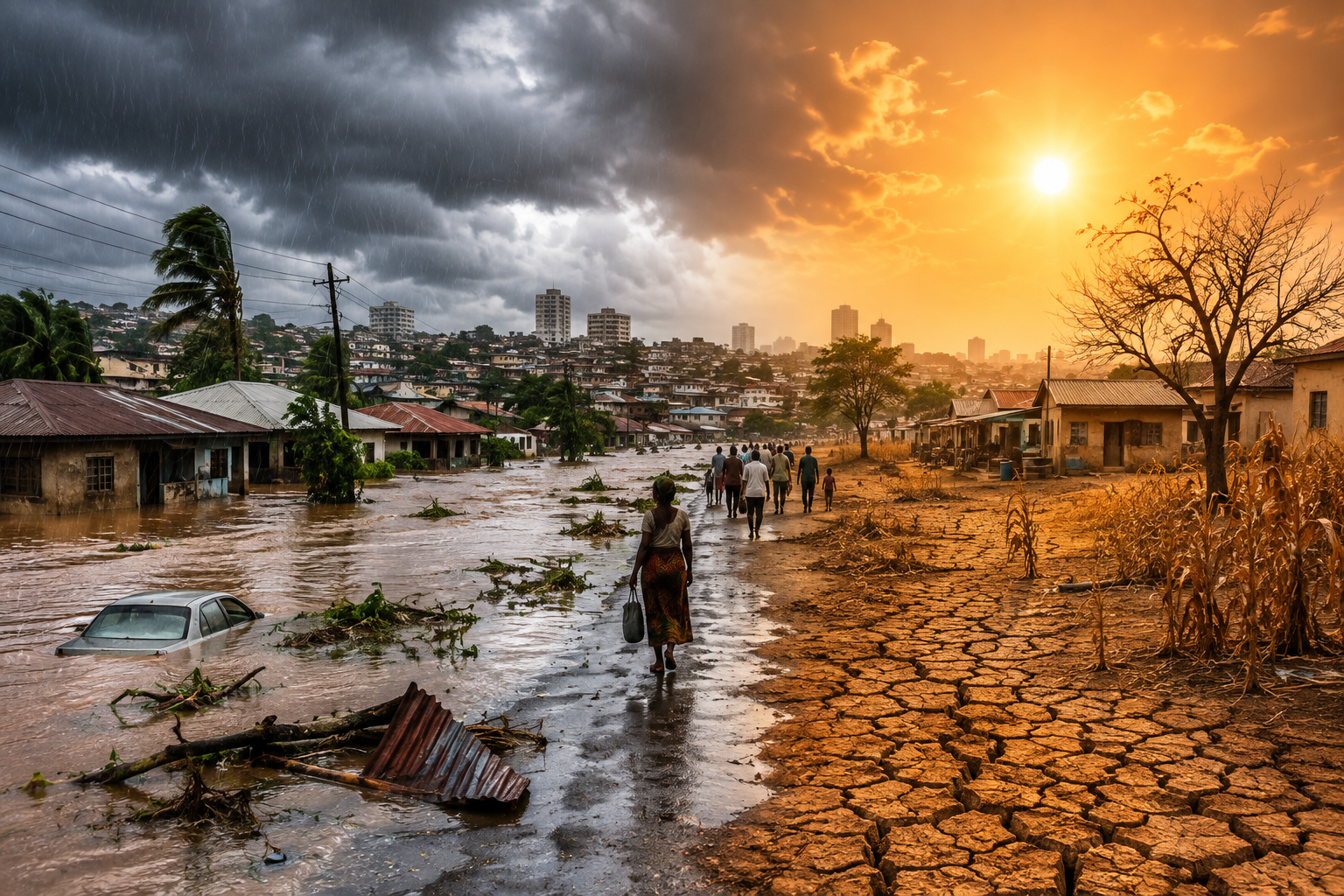
Africa stands at a paradoxical crossroads. Despite contributing less than 4% of global greenhouse gas emissions, our continent carries the heaviest burden of climate inaction. From the parched fields of the Sahel to the flood-scarred coasts of Mozambique, the "negligence" of climate change is not a future threat—it is a present, human crisis.
But as I explore in my latest work, Africa is not merely a victim. We are a continent of innovators, leaders, and resilient communities ready to turn vulnerability into leadership.
The Reality of Meteorological Shifts
The rhythms of nature that once guided our farmers have been broken. Rainfall variability, prolonged droughts, and searing heat are rewriting the stories of millions. In northern Nigeria, farmers like Amina face disorienting rain cycles, where survival depends on outsmarting an unpredictable sky. In Mozambique, the memory of Cyclone Idai remains a painful reminder of how quickly everything we build can be swept away.
These are not "natural accidents." They are the results of human activity, historical exploitation, and governance gaps. To conquer this, we must first understand that Africa’s climate struggle is a global call to justice.
Dismantling the Colonial Legacy
We cannot address today’s crisis without confronting our past. Colonialism dismantled indigenous ecological knowledge, replacing adaptive systems with monocultures aimed at European markets. This stripped our farmers of autonomy and left our lands vulnerable.Conquering climate change requires us to reclaim indigenous knowledge, restore land rights, and create inclusive governance that listens to the voices of those on the frontlines.
The Power of Grassroots Innovation
The most inspiring solutions are not coming from top-down policies, but from the heart of our communities:
- Renewable Energy: Women-led initiatives like Solar Sister are transforming lives by bringing clean energy to rural villages.
- Sustainable Agriculture: Farmers are reviving drought-resistant crops and using agroecology to restore soil health without expensive chemicals.
- Youth Leadership: With 60% of our population under 25, our youth are not passive victims—they are the architects of our green cities and digital climate solutions.
My 10 Sustainability Goals for Africa
To drive meaningful change, I propose a vision rooted in ten actionable goals:
- Food Security through climate-smart agriculture.
- Water as a Right, harvesting every drop of rain.
- Renewable Energy for All, ending the darkness with solar and wind.
- Green Cities, building for sustainability, not pollution.
- Women at the Centre, empowering the guardians of our food security.
- Youth-Led Innovation, integrating climate literacy into every classroom.
- Indigenous Knowledge, guiding modern policy with ancestral wisdom.
- Resilient Infrastructure, protecting the most vulnerable.
- Accountable Governance, closing the gap between policy and practice.
- Financing the Future, demanding global climate justice and debt-free investment.
Moving Forward
The road ahead is long, but it is bright with possibility. Negligence is expensive, but action—though challenging—is priceless. I invite every policymaker, student, and activist to join this movement. The fight against climate change is not for Africa alone; it is a journey toward a fairer, greener world for us all.